


The Nocturn Industries Talon: A Different Approach to the PVS-14 Concept
The Talon is designed as an ultralight night vision monocular while retaining compatibility with many of the components and accessories users already associate with the PVS-14 ecosystem.
One of the most notable characteristics of the Talon is its housing weight. The housing itself weighs approximately 53 grams, or 1.87 ounces, in the CR123A configuration. Nocturn Industries states that this is roughly half the weight of a standard AA PVS-14 housing.
That weight reduction is achieved through a high-strength fiber-reinforced thermoplastic construction rather than relying on a traditional metal housing.

The result is a monocular that is particularly interesting for anyone who wants the familiarity of a PVS-14-style system while reducing the amount of weight carried on a helmet or night vision mount.
A Single Control Knob Handles the Talon’s Major Functions
Another significant part of the Talon’s design is its control system.
Rather than using multiple switches or controls, the Talon uses a single tactile control knob for the major functions of the device. Pressing and holding the knob controls power, while rotating the knob provides gain adjustment.
The same control is also used for the integrated infrared illuminator. A double tap activates the IR illuminator, and the control can then be rotated to adjust its brightness.
The Talon also incorporates an auto-off-on-stow function and a low-battery indicator. These features are designed to keep the interface relatively simple while still providing functionality that night vision users commonly need.
PVS-14 Compatibility Without Being a PVS-14
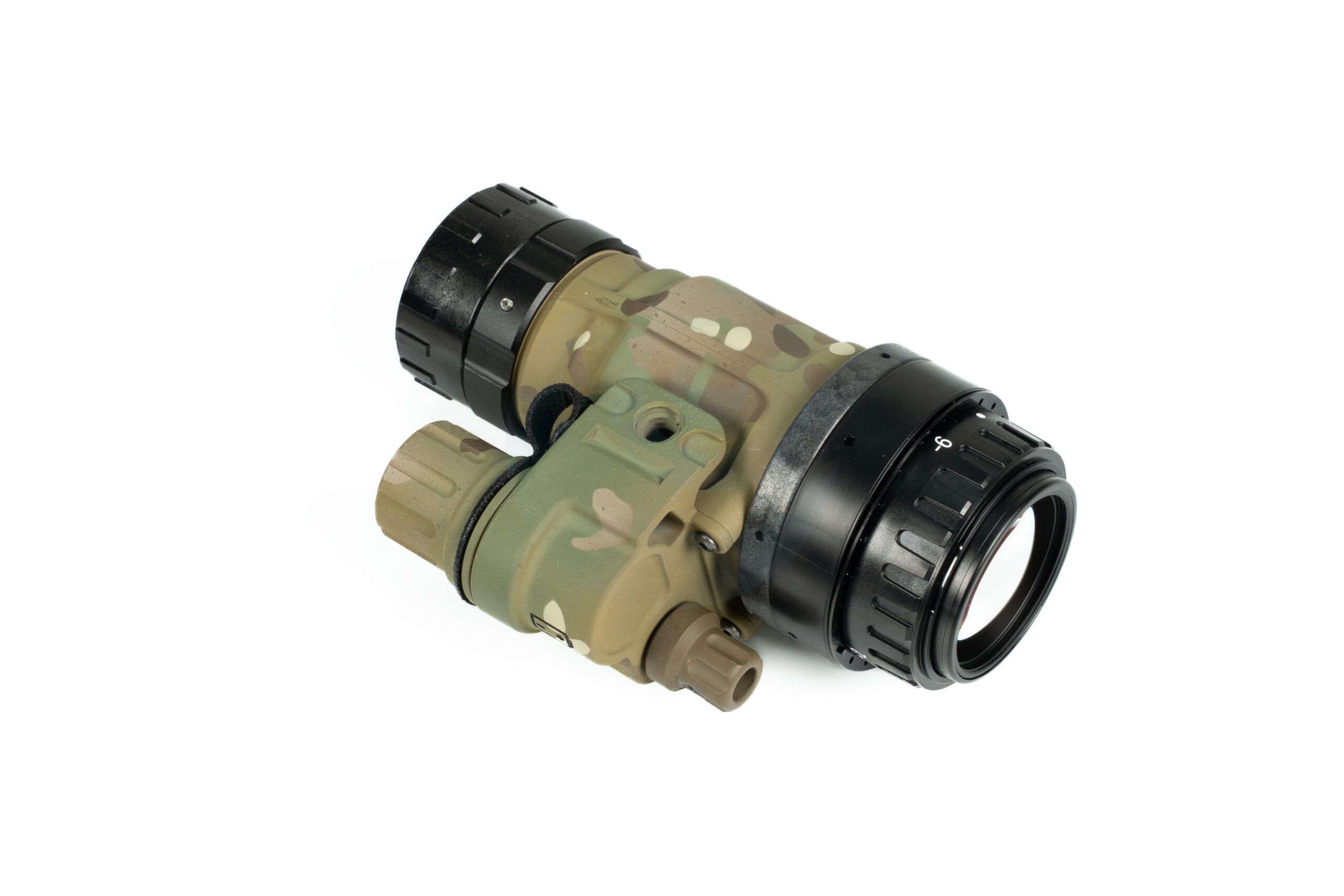
One of the biggest advantages of the Talon is that reducing the size and weight of the housing does not mean abandoning the established night vision ecosystem.
The Talon supports standard EGAC MX-11769 intensifier tubes as well as three-pad MX-11769 European-style tubes. It is also compatible with standard PVS-14-style J-arms and accessories.
That makes the Talon an interesting option for someone who already owns PVS-14 accessories or wants to build a lightweight monocular around a familiar mounting system.
Custom Night Vision also offers the Talon with multiple intensifier tube manufacturers, including L3Harris, Elbit, Photonis and NNVT, depending on current inventory and configuration.
Optics Options Make the Talon Even More Flexible
The Talon is not limited to a single optic package. Custom Night Vision currently offers several optic choices, including standard mil-spec optic sets and lightweight alternatives.
Options include standard mil-spec optics, BrightPath optics, Rochester Precision Optics RPO 3.0 ultralight optics, Photonis Defense Boomslang 50-degree optics and Act in Black 50-degree optics.
The RPO 3.0 option is particularly relevant for users focused on reducing overall helmet weight. According to the current CNV listing, the Talon with standard mil-spec optics weighs approximately 9.66 ounces, while a configuration using RPO lightweight optics is listed at approximately 7.65 ounces.
The Raptor: Taking the Same Lightweight Philosophy to a Binocular
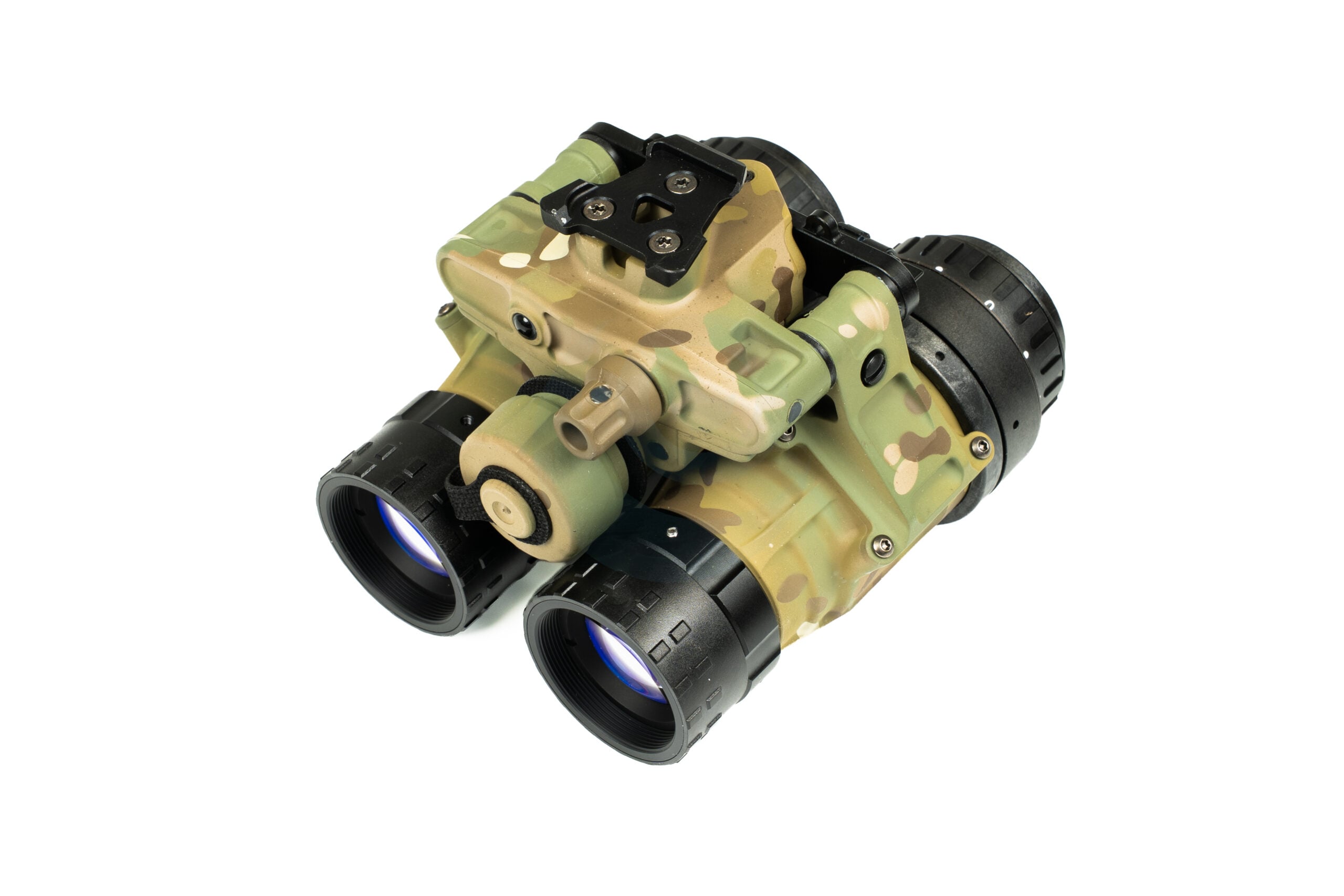
If the Talon represents Nocturn’s ultralight monocular approach, the Raptor takes that same philosophy into a full articulating binocular system.
The Nocturn Industries Raptoris an Ultra-Light Articulating Night Vision Binocular built around a fiber-reinforced thermoplastic housing. Nocturn Industries describes the material as being engineered to surpass traditional polymer solutions while approaching the strength characteristics associated with 6061-T6 aluminum.
For a binocular housing, controlling weight is especially important because the additional mass is positioned directly on the user’s helmet and mount.
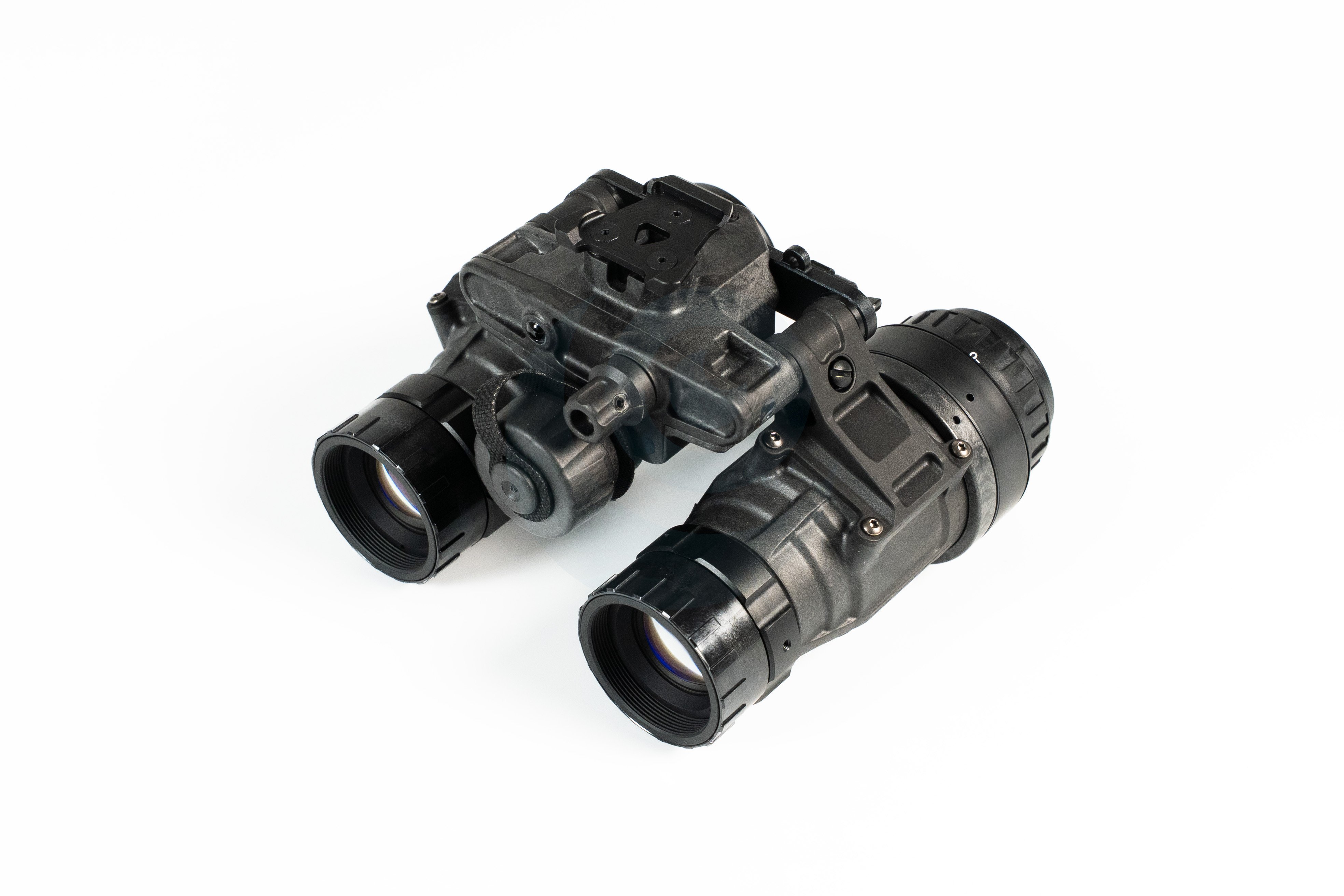
Custom Night Vision lists the Raptor housing at approximately 142 grams, or 5 ounces. Complete system weight varies depending on the selected optics and intensifier tubes.
Articulating Pods and Tool-Free IPD Adjustment
The Raptor’s biggest functional difference from the Talon is obviously its binocular configuration, but the articulation system adds another level of flexibility.
Each pod can articulate independently, allowing the binocular to be moved away from the user’s eyes when night vision is not required without necessarily removing the entire system from the helmet.
The Raptor also incorporates low-profile, tool-free IPD adjustment knobs. This allows the user to adjust the distance between the optical pods without reaching for a tool.
Another useful feature is individual pod shutoff when the binocular is articulated. This allows the system to manage power when one of the pods is moved away from the viewing position.
The Raptor Adds External Power Capability
Power management is another area where the Raptor expands on the Talon’s design.
The Raptor has an onboard CR123A battery compartment and an external LEMO 2-pin power connection. The internal battery is rated for more than 26 hours of runtime according to Nocturn Industries.
That external power capability gives the Raptor additional flexibility for users who want to integrate an external battery system into their helmet-mounted night vision setup.
For users building a complete helmet system, external power can also help move battery weight away from the front of the goggles and toward another location on the helmet.
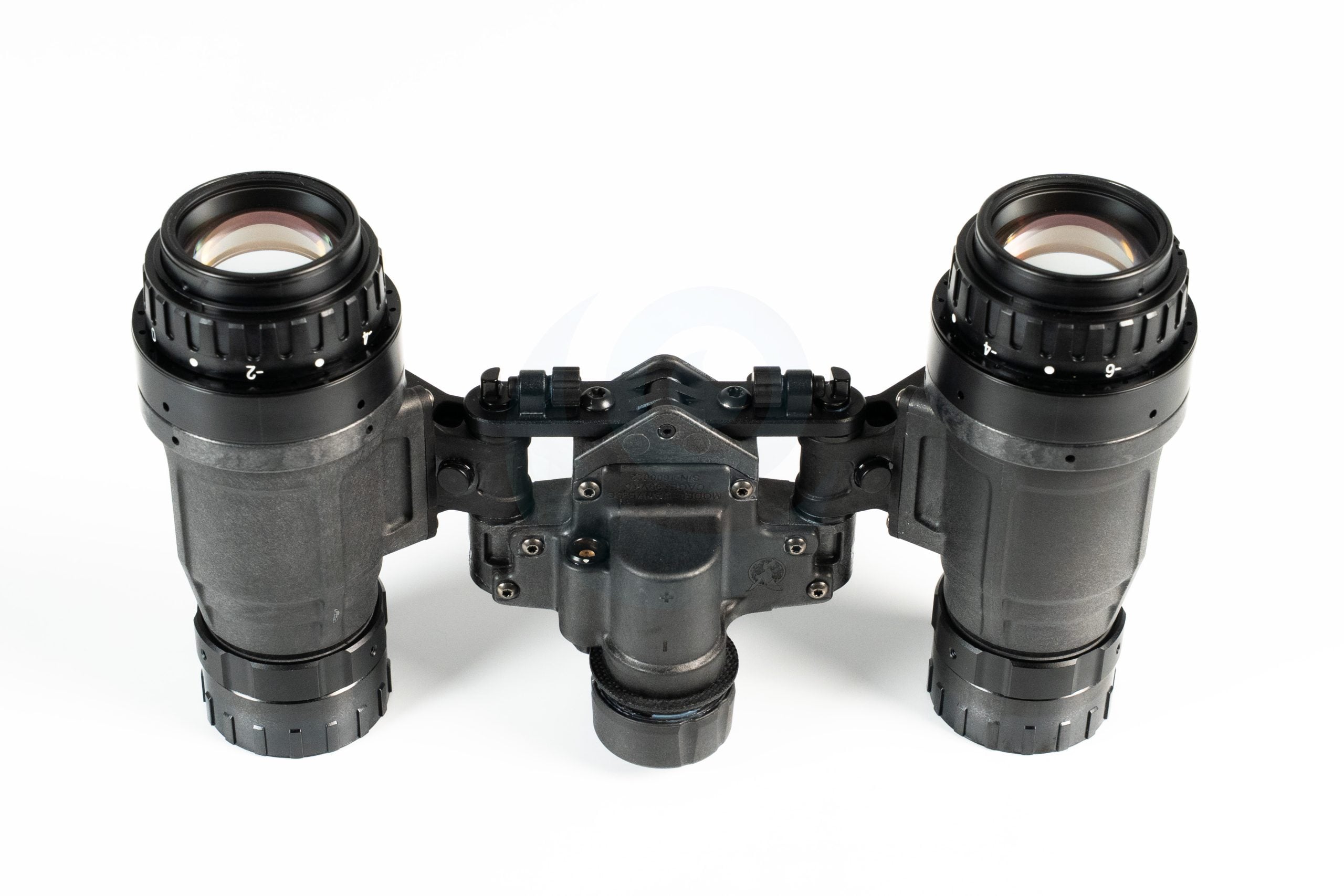
Shared Controls Across the Talon and Raptor
Despite being designed for different applications, the Talon and Raptor share much of the same control philosophy.
- Single primary control knob
- Manual gain adjustment
- Integrated adjustable IR illuminator
- Low-battery indication
- Auto-off functionality when stowed
- PVS-14-compatible optics and mounting ecosystem
- Compatibility with MX-11769-style intensifier tubes
- Fiber-reinforced thermoplastic construction
- Lifetime housing repair or replacement warranty from Nocturn Industries
This commonality is important because it creates a familiar operating experience across the two platforms.
Talon vs. Raptor: Which Platform Fits Your Setup?
| Feature | Talon | Raptor |
|---|---|---|
| Configuration | Monocular | Articulating binocular |
| Housing Weight | 53 g / 1.87 oz | 142 g / 5.0 oz |
| Primary Control | Single control knob | Single control knob |
| Manual Gain | Yes | Yes |
| Integrated IR | Adjustable | Adjustable |
| External Power | No onboard LEMO port | LEMO 2-pin |
| IPD Adjustment | N/A | Tool-free |
| Pod Articulation | N/A | Individual articulating pods |
| Battery | CR123A or AA | CR123A |
One Platform, Two Different Night Vision Solutions
The Talon and Raptor are not simply two versions of the same night vision device. They address two different approaches to helmet-mounted night vision.
The Talon focuses on taking the familiar monocular concept and reducing the housing weight dramatically while retaining compatibility with established PVS-14 components. It can make sense for users who prefer a monocular configuration, want maximum weight savings, or already have a PVS-14-style mounting system.
The Raptor takes that same lightweight design philosophy and applies it to a binocular. The articulating pods, tool-free IPD adjustment, individual pod control and external power capability make it a substantially different system for users who want the advantages of binocular night vision.
One particularly interesting part of the Nocturn platform is that the image tube pod is interchangeable between the Talon and Raptor product lines. That commonality creates additional flexibility for users who may eventually move between a monocular and binocular configuration.
Choosing Intensifier Tubes for a Talon or Raptor
The housing is only one part of a night vision system. The intensifier tubes have a major effect on image quality, low-light performance and overall system cost.
Custom Night Vision currently offers both the Talon and Raptor with multiple tube manufacturers and configurations. Depending on the system, available options include L3Harris, Elbit, Photonis and NNVT.
When selecting a tube, specifications such as resolution, signal-to-noise ratio, equivalent background illumination, gain and blemish location can all be relevant. A higher FOM number alone does not tell the entire story, which is why reviewing the individual tube data sheet can be useful when selecting a system.
CNV also offers hand-selected tube options on applicable configurations. Customers who prefer not to choose an individual tube can have a set selected based on their stated preferences and approve the actual tubes before the system is completed.
Building a Complete Night Vision Setup
Neither the Talon nor Raptor has to exist as an isolated component. Custom Night Vision offers package options that can be configured around helmets, mounts, lasers and other night vision accessories.
For a Talon, that could mean building a lightweight monocular package around a PVS-14-style dovetail or J-arm mounting system.
For a Raptor, the system can be paired with a compatible helmet mount and an external battery solution when additional power management is desired.
The result is a night vision setup built around the user’s intended application rather than simply choosing a preconfigured system and adapting everything else around it.
Shop the Nocturn Industries Talon and Raptor
Custom Night Vision offers the Nocturn Industries Talon and Nocturn Industries Raptor with multiple housing, optic and intensifier tube configurations.
If you’re unsure which configuration makes sense for your setup, the most important factors to consider are the monocular versus binocular format, total system weight, intensifier tube specifications, optic selection, mounting system and power requirements.
Need help building a night vision system? Contact Custom Night Vision and our team can help you put together a configuration based on your intended use, preferred tube specifications and budget.
Frequently Asked Questions
How much does the Talon housing weigh?
The Talon housing weighs approximately 53 grams, or 1.87 ounces, in the CR123A configuration.
How much does the Raptor housing weigh?
The Raptor housing is listed by Custom Night Vision at approximately 142 grams, or 5 ounces.
Can the Talon use PVS-14 optics?
Yes. The Talon is compatible with PVS-14-style optics and mounting accessories, while also supporting MX-11769-style intensifier tubes.
Does the Raptor have an external battery connection?
Yes. The Raptor incorporates an external LEMO 2-pin power port in addition to its onboard CR123A battery compartment.
Can the Talon and Raptor use the same type of image intensifier tube?
Both systems support 18mm MX-11769-style intensifier tubes, including EGAC pigtail and three-pad configurations. The exact tube compatibility should be confirmed for the selected build.
Are the Talon and Raptor made in the United States?
Nocturn Industries states that both the Talon and Raptor are designed and assembled in the United States.
Final Thoughts
The Talon and Raptor represent two different ways to approach lightweight night vision. The Talon takes the monocular concept and pushes aggressively toward weight reduction, while the Raptor brings that same lightweight design philosophy into an articulating binocular platform.
Both systems retain compatibility with established night vision components while adding modern features such as single-knob controls, integrated adjustable IR illumination and lightweight reinforced composite housings.
For anyone building a new night vision system, the choice between the two ultimately comes down to the type of system desired: a lightweight monocular or a fully articulating binocular. From there, the intensifier tubes, optics, mount and power configuration can be tailored to create a complete system around the user’s requirements.
https://youtu.be/FjqC1igIUKA