


3EIR Sentinel-ONE OG Review: Compact IR Laser and VCSEL Illuminator Compared
Choosing a laser aiming and infrared illumination system involves more than comparing output ratings or looking at product photographs. Beam shape, illumination uniformity, control layout, overall dimensions, power requirements, and compatibility with night vision equipment can all influence whether a particular system is a good fit.
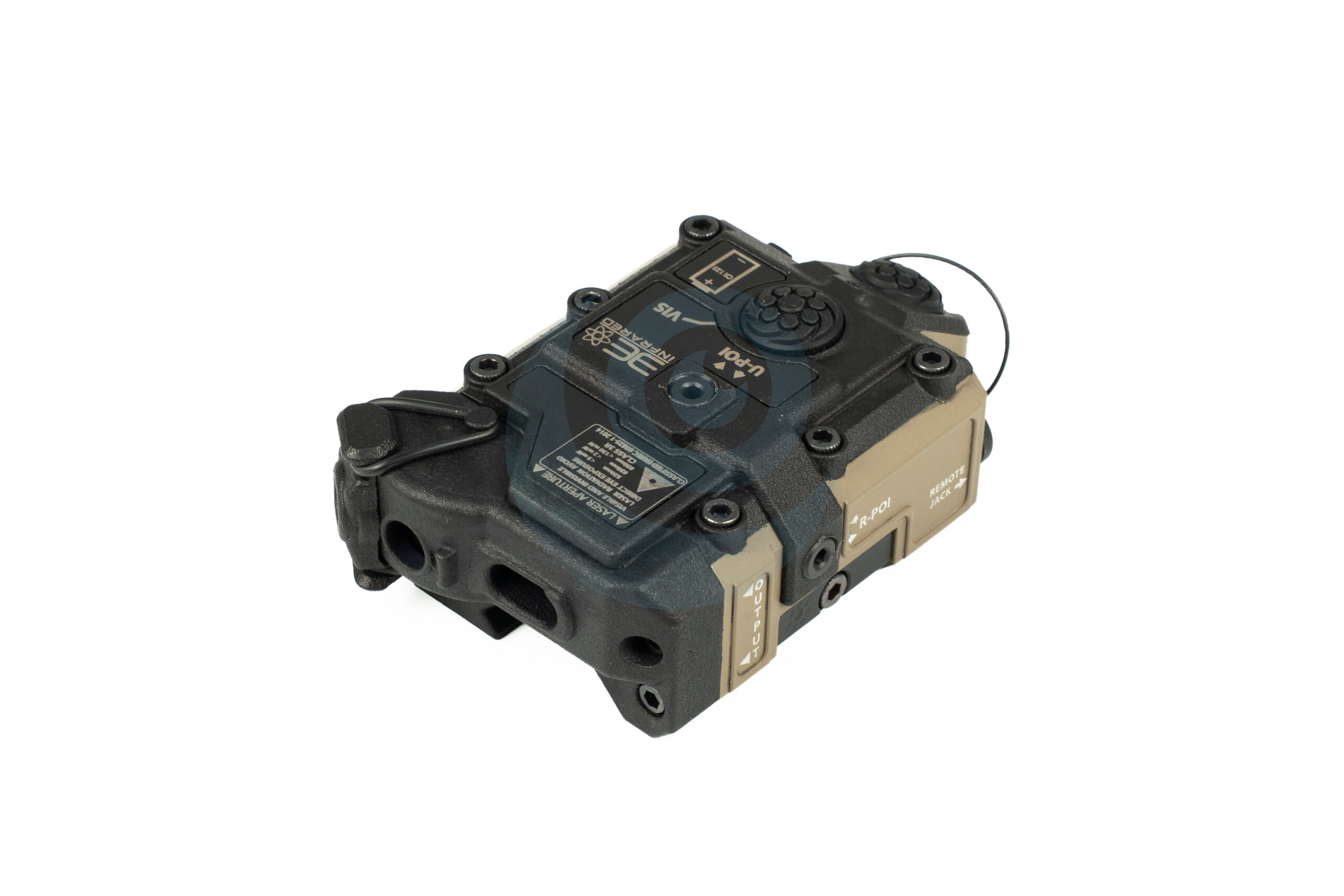
The 3EIR Sentinel-ONE OG combines a visible green laser, an infrared aiming laser, and a VCSEL infrared illuminator in a compact housing. Its switchless control design and integrated illumination filter make it an interesting option for buyers comparing modern laser systems from 3EIR, Wilcox Industries, and Holosun.
Custom Night Vision currently lists the Sentinel-ONE OG for $1,776. The system is manufactured in the United States and is available in Black, Flat Dark Earth, and Grey.
View the 3EIR Sentinel-ONE OG at Custom Night Vision
Watch the Custom Night Vision Sentinel-ONE OG Comparison
In the video below, Custom Night Vision compares the Sentinel-ONE OG with the Wilcox RAID Xe and Holosun IRIS 3. The comparison examines the practical differences between these systems, including illumination performance, beam adjustment, controls, overall size, and the distinction between civilian-power and restricted high-power configurations.
What Is the 3EIR Sentinel-ONE OG?
The Sentinel-ONE OG is a compact laser aiming and illumination device manufactured by Three Electrons Infrared, commonly known as 3EIR. It integrates three primary optical functions into one housing:
- Visible green laser: Provides a visible aiming reference.
- Infrared aiming laser: Provides an infrared aiming output for compatible night vision applications.
- VCSEL infrared illuminator: Adds infrared illumination to the system.
Combining these functions into one device can simplify equipment integration compared with assembling separate aiming and illumination components. It also means the user needs to evaluate how well the integrated controls, illumination pattern, mounting footprint, and power system suit the intended application.
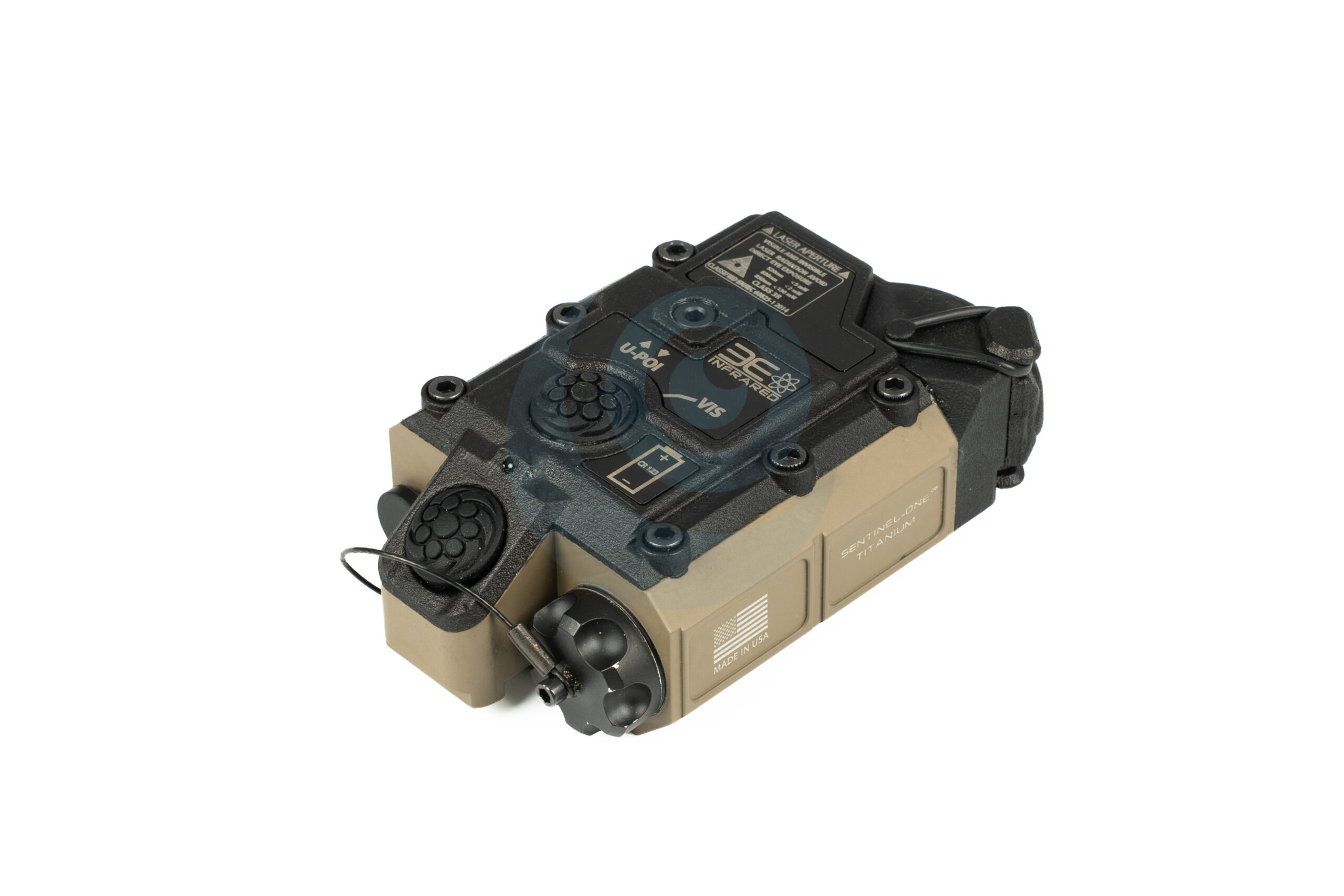
The Sentinel-ONE OG uses 3EIR Switchless Laser Technology, or SLT. Rather than relying on a conventional rotary mode selector, the device uses dedicated onboard buttons and a compatible remote-switch connection.
That design is central to the Sentinel-ONE OG’s appeal: it combines multiple functions while keeping the housing relatively compact and the onboard control layout straightforward.
Why the Infrared Illuminator Matters
An infrared aiming laser and an infrared illuminator perform different jobs. An aiming laser projects a comparatively narrow reference point, while an illuminator provides a broader area of infrared light.
When using night vision equipment, the amount of available ambient light can vary considerably. A device may perform well in an environment with some natural illumination but require additional infrared light in a darker setting.
The Sentinel-ONE OG integrates its infrared aiming laser and VCSEL illuminator into the same housing. This gives users a combined system rather than requiring a separate illuminator to be added solely to provide the infrared illumination function.
Understanding Illuminator Output Ratings
The CNV product listing specifies a VCSEL illuminator output of less than 130 mW at 850 nm. That figure is useful when comparing published specifications, but it should not be treated as a complete measure of real-world illumination quality.
Output ratings alone do not describe every aspect of the projected beam. Beam divergence, uniformity, edge brightness, speckle, adjustment range, and the environment in which the device is used can all affect the observed result.
This is why side-by-side evaluations can be useful: they show how a device’s illumination behaves in practice rather than asking buyers to make a decision using a single number.
Beam Shape: Flood, Focus, Throw, and Spill
One of the important features highlighted in the Sentinel-ONE OG comparison is its integrated illumination filter or diffuser. The system is designed to offer a broader, more diffused illumination pattern as well as a more concentrated beam pattern.
These characteristics are often described using four related terms.
Flood
A flood pattern spreads light across a wider area. This can make it easier to illuminate a broad portion of the surrounding environment rather than concentrating the available light into a narrow region.
Focused Beam
A more focused beam concentrates illumination into a smaller angular area. The visible effect depends on the device’s optical design, the selected setting, the distance, and the surrounding conditions.
Throw
Throw describes how effectively an illumination system provides useful light at a given distance. It is influenced by output, beam concentration, optical efficiency, atmospheric conditions, and the sensitivity of the viewing equipment.
Spill
Spill is the illumination that extends beyond the central portion of a beam. A beam with a defined central region and useful surrounding illumination behaves differently from one that concentrates most of its light into a very narrow spot.
There is no single beam shape that is best in every situation. A broader pattern and a concentrated pattern serve different purposes, so adjustability can be more useful than simply maximizing one output characteristic.
3EIR Sentinel-ONE OG Specifications
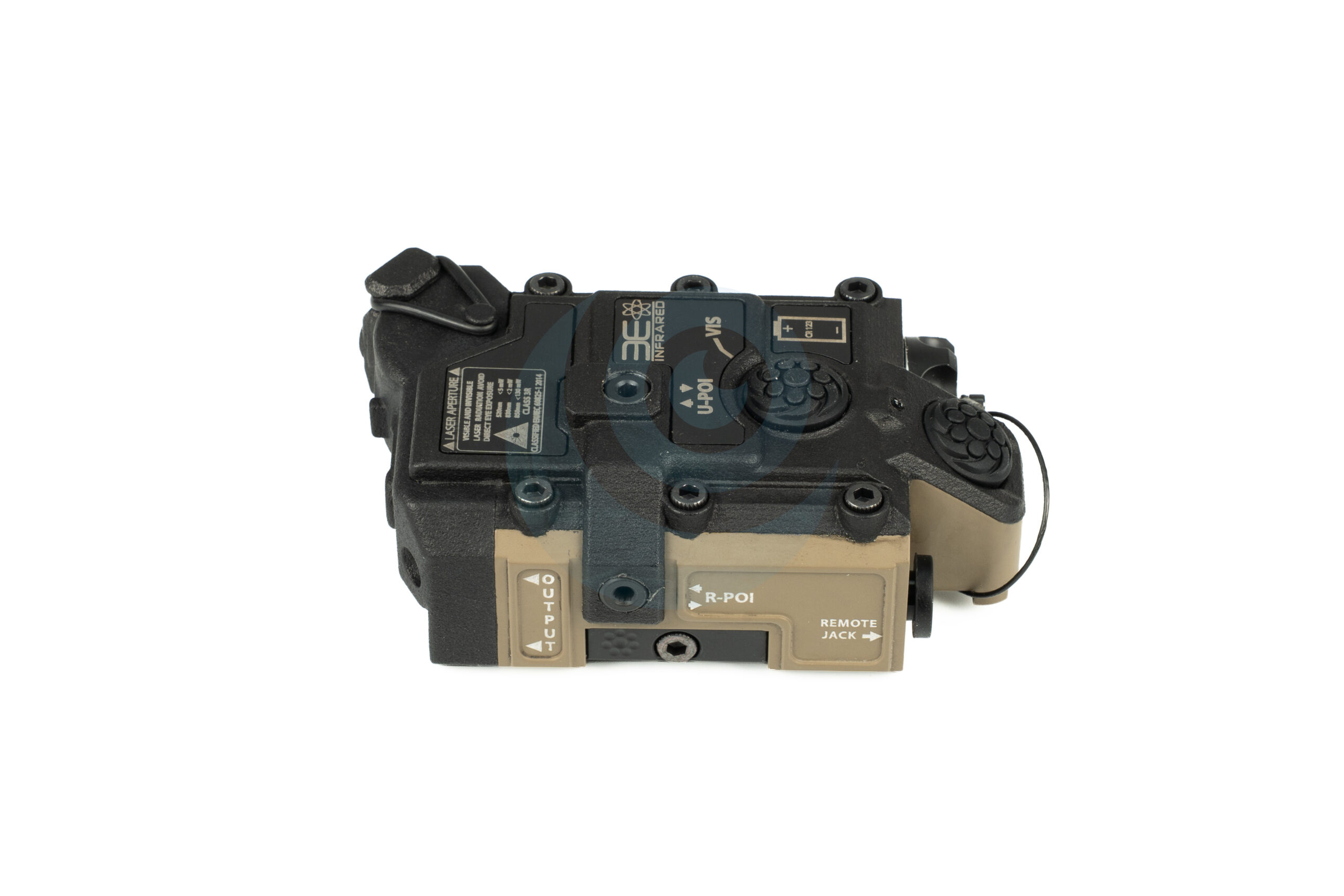
Custom Night Vision lists the following specifications for the Sentinel-ONE OG. Always consult the current manufacturer documentation for the exact configuration and applicable safety requirements.
| Specification | Sentinel-ONE OG |
|---|---|
| Manufacturer | Three Electrons Infrared (3EIR) |
| Visible laser | Green, 520 nm |
| Visible laser output | Less than 5.0 mW, Class 3R as listed by CNV |
| Infrared aiming laser | 830 nm |
| Infrared laser output | Less than 2.5 mW, Class 3R as listed by CNV |
| Infrared illuminator | 850 nm VCSEL |
| Illuminator output | Less than 130 mW as listed by CNV |
| Dimensions | 2.43 × 2.04 × 0.6 inches above the rail |
| Weight | 5.1 oz without battery |
| Battery | One CR123A |
| Listed runtime | More than 6 hours |
| Environmental rating | IP68 |
| Housing | Triblend of titanium, 6061-series aluminum, and polymer |
| Mounting clamp | 7075-series aluminum |
| Warranty | Two-year system warranty and lifetime housing warranty, as listed by CNV |
| Country of manufacture | United States |
| Available colors | Black, FDE, and Grey |
Source: Custom Night Vision Sentinel-ONE OG product listing.
Switchless Controls and Remote Activation
The Sentinel-ONE OG’s switchless architecture is another important part of its design. The onboard controls provide access to the device’s visible and infrared functions, while the CRANE-compatible remote port supports the visible-green override function described by CNV.
The goal of this design is to consolidate controls without adding a large mode-selection dial to the housing.
Why Control Layout Matters
Laser systems with similar optical functions can feel quite different to use because of their control arrangements. Buyers should consider the position of the onboard controls, the included or compatible remote switch, the available activation modes, and whether the arrangement suits their existing equipment.
Compatibility should be confirmed before purchasing an optional switch. A connector that looks familiar does not necessarily mean every switch supports every function on every device.
For customers looking at an additional control option, CNV also lists the 3EIR Sentinel-ONE OG Alternate IR Switch. Review its compatibility details alongside the exact laser configuration before ordering.
Sentinel-ONE OG vs. Holosun IRIS 3
The Holosun IRIS 3 is a useful comparison because it also combines a visible laser, an infrared aiming laser, and a VCSEL infrared illuminator in one compact device.
Holosun’s official specifications for the green-laser IRIS-GR3 list a 60 mW VCSEL illuminator, a 520 nm visible green laser, an infrared aiming laser, a 7075-T6 aluminum housing, a CR123A battery, and a weight of 6.4 oz.
The Sentinel-ONE OG’s CNV listing specifies a VCSEL illuminator output of less than 130 mW and a weight of 5.1 oz without the battery. The stated measurements and output ratings come from the respective published product specifications; they are not, by themselves, a controlled performance test.
| Feature | 3EIR Sentinel-ONE OG | Holosun IRIS-GR3 |
|---|---|---|
| Visible laser | Green, 520 nm | Green, 520 nm |
| IR aiming laser | Yes, 830 nm | Yes, 800–880 nm as listed by Holosun |
| IR illuminator | 850 nm VCSEL, less than 130 mW as listed by CNV | 60 mW VCSEL as listed by Holosun |
| Published weight | 5.1 oz without battery | 6.4 oz |
| Battery | One CR123A | One CR123A |
| Environmental rating | IP68 as listed by CNV | IPX8 as listed by Holosun |
| Housing material | Titanium, aluminum, and polymer triblend | 7075-T6 aluminum |
| Illumination adjustment | Integrated filter/diffuser arrangement | Top-mounted beam adjustment slider |
Sources: CNV Sentinel-ONE OG specifications and Holosun IRIS-GR3 manufacturer specifications.
One important distinction is that a higher published illuminator output rating does not automatically prove superior performance in every environment. Beam pattern, optical efficiency, uniformity, and the measurement methods used by each manufacturer all matter.
For the buyer, the most useful comparison is the complete package: physical profile, illumination characteristics, controls, power requirements, durability, warranty, and price.
Sentinel-ONE OG vs. Wilcox RAID Xe
The Wilcox RAID Xe is another relevant comparison, but buyers need to distinguish between the civilian-power model and the restricted high-power model.
The RAID Xe family uses a different optical and control architecture. CNV describes the system as combining a near-infrared room illuminator with a variable VCSEL illuminator. The dedicated room-illumination function is an important difference when evaluating the overall system design.
The Sentinel-ONE OG instead emphasizes a compact integrated design with visible green aiming, an infrared aiming laser, and a VCSEL illuminator in a low-profile housing.
| Comparison point | 3EIR Sentinel-ONE OG | Wilcox RAID Xe |
|---|---|---|
| Visible aiming laser | Green | Configuration-dependent; CNV lists civilian and restricted models separately |
| IR aiming laser | Yes | Yes |
| IR illumination | Integrated VCSEL illuminator with filter/diffuser | Variable VCSEL illumination plus a dedicated room illuminator |
| Control philosophy | Switchless onboard controls and compatible remote activation | RAID Xe-specific keypad and remote-control ecosystem |
| Power | One CR123A | One CR123 battery for the listed RAID Xe configuration |
| Power class | CNV lists Class 3R outputs for the Sentinel-ONE OG | Depends on configuration; the high-power version is restricted |
Explore both RAID Xe configurations at Custom Night Vision:
The restricted high-power RAID Xe is a different class of product from the civilian-power models. It is intended for eligible military and law-enforcement customers, with credential requirements specified by CNV. It should not be treated as a direct like-for-like alternative to a Class 3R commercial system.
Compact Dimensions and Housing Design
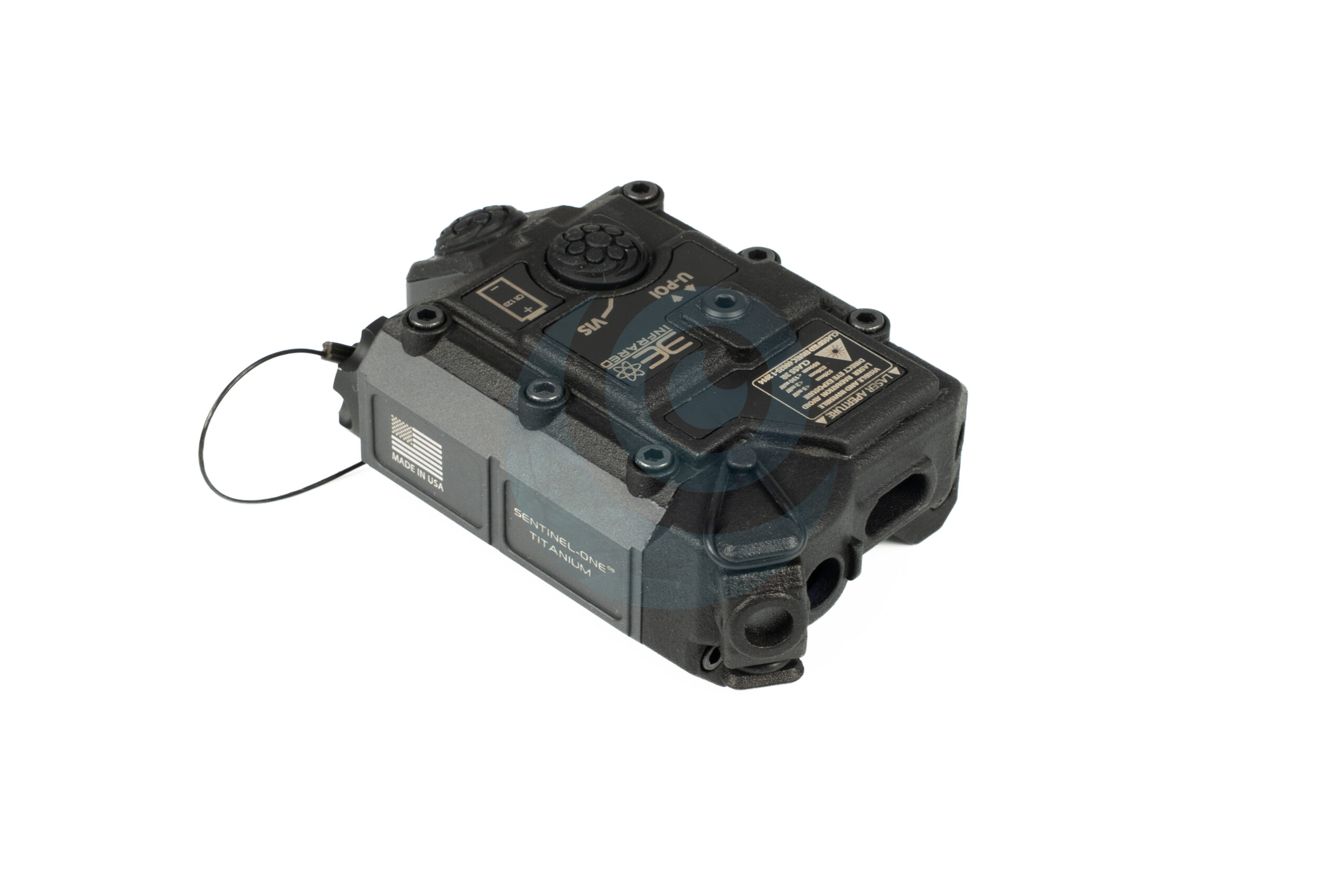
According to CNV, the Sentinel-ONE OG measures 2.43 × 2.04 × 0.6 inches above the rail and weighs 5.1 oz without its battery.
The low-profile measurement is relevant when considering the space occupied by the device. The housing uses a combination of titanium, 6061-series aluminum, and polymer, while the mounting clamp is made from 7075-series aluminum.
This mixed-material construction differs from the 7075-T6 aluminum housing used by the Holosun IRIS-GR3. Neither material description alone determines overall durability; the complete structural design, mounting interface, environmental sealing, and manufacturer testing also matter.
Battery Life and Environmental Protection
The Sentinel-ONE OG uses one CR123A battery and has a published runtime of more than six hours. Battery life varies with operating conditions and should be checked against the manufacturer’s current documentation.
CNV lists the unit with an IP68 environmental rating. The product page also specifies an operating temperature range of -10°C to 60°C.
These details matter when comparing equipment for demanding environments. However, buyers should review the actual manufacturer’s guidance for water exposure, maintenance, storage, battery handling, and environmental limitations rather than assuming that two products with similar ratings have identical performance under all conditions.
What to Consider Before Choosing a Laser and Illuminator
The Sentinel-ONE OG, Holosun IRIS 3, and Wilcox RAID Xe have overlapping functions, but their designs and available configurations are not identical. Before choosing a system, consider the following factors.
1. Illumination Characteristics
Look beyond the published output number. Consider the beam pattern, adjustment range, uniformity, and how the illumination behaves in the intended environment. When possible, review a direct comparison using the same viewing equipment and comparable conditions.
2. Control Compatibility
Check the onboard control layout, remote-switch connection, and supported functions. Confirm compatibility with any existing switch or accessory rather than assuming that a shared connector guarantees equivalent operation.
3. Dimensions and Weight
Compare the complete device dimensions and weight, including the battery and any attached switch. Published weights sometimes exclude batteries or accessories, so check the measurement basis before making a direct comparison.
4. Output Class and Legal Requirements
Confirm the laser classifications and output specifications for the exact model. Civilian-power and restricted high-power products are not interchangeable from a regulatory or safety perspective.
5. Warranty and Support
Warranty coverage, repair arrangements, replacement availability, and manufacturer support should be part of the purchasing decision. The headline feature list is only one part of the value of a complete system.
Laser Safety and Responsible Use
Laser aiming devices and infrared illuminators must be handled according to their manufacturer instructions and applicable regulations. Infrared output may be invisible to the unaided eye, so the absence of visible light does not mean the beam is harmless.
Never look directly into a laser aperture or view a laser beam through optical instruments. Follow all manufacturer warnings, use only approved configurations, and observe any restrictions applicable to the specific device and output class.
For the Sentinel-ONE OG, consult the current product manual and the manufacturer’s instructions for the exact configuration being purchased.
Frequently Asked Questions
What is the 3EIR Sentinel-ONE OG?
The Sentinel-ONE OG is a compact laser aiming and illumination system that combines a visible green laser, an infrared aiming laser, and a VCSEL infrared illuminator.
What does OG mean in Sentinel-ONE OG?
In this product configuration, OG refers to the override-green arrangement. CNV describes a CRANE-compatible remote-switch port that activates the visible green laser override function.
What wavelength is the Sentinel-ONE OG infrared illuminator?
CNV lists the VCSEL illuminator at 850 nm. The infrared aiming laser is listed at 830 nm.
How much does the Sentinel-ONE OG weigh?
Custom Night Vision lists the Sentinel-ONE OG at 5.1 oz without its CR123A battery.
What battery does it use?
The current CNV listing specifies one CR123A battery and a runtime of more than six hours. Refer to the current manufacturer documentation for battery compatibility and handling requirements.
How does the Sentinel-ONE OG compare with the Holosun IRIS 3?
Both systems integrate a visible laser, an infrared aiming laser, and a VCSEL illuminator. Their published output ratings, housing designs, controls, dimensions, and environmental specifications differ. Compare the current manufacturer specifications and the actual beam characteristics rather than relying on a single output number.
How does the Sentinel-ONE OG compare with the Wilcox RAID Xe?
The Sentinel-ONE OG combines its three optical functions in a compact, switchless design. The RAID Xe family uses a different control and illumination architecture, including a dedicated room illuminator. The civilian-power and restricted high-power RAID Xe versions must be evaluated separately.
What warranty does the Sentinel-ONE OG include?
CNV lists a two-year system warranty and a lifetime housing warranty. Review the current product documentation for the exact terms and exclusions.
Final Thoughts: Is the 3EIR Sentinel-ONE OG Worth Considering?
The 3EIR Sentinel-ONE OG is an interesting option for buyers who want a compact, integrated visible-laser, infrared-laser, and VCSEL-illuminator system. Its switchless control layout, integrated illumination filter, mixed-material housing, and relatively low-profile dimensions distinguish it from other systems in this category.
The comparison with the Holosun IRIS 3 demonstrates why two products with similar core functions can still differ in output ratings, controls, physical design, and environmental specifications. The comparison with the Wilcox RAID Xe also highlights the importance of distinguishing civilian-power configurations from restricted high-power systems.
Ultimately, the best choice depends on the complete specification set, illumination characteristics, control compatibility, environmental requirements, warranty, and intended lawful application—not simply which device has the largest published output figure.
Ready to learn more? Visit the 3EIR Sentinel-ONE OG product page at Custom Night Vision to review the current price, color options, and product details.
You can also browse the 3EIR product category to compare other laser and illumination systems, including the Sentinel-IRV Override Green and the Sentinel-IRV Crane Override Green.
For a broader comparison, explore the Custom Night Vision laser category or contact CNV for help evaluating compatibility and available configurations.